By Craig Cleveland
The South Carolina Lowcountry has a way of drawing people in and keeping them. Whether you first visited Hilton Head Island for a golf weekend, a beach vacation, or a friend's retirement party, the appeal tends to compound over time. At some point, staying starts to feel more appealing than leaving, and the question shifts from "should I buy here?" to "where do I start?" That question deserves a serious answer.
Investing in Lowcountry real estate is one of the most rewarding decisions you can make, but like any significant purchase, it pays to go in with a clear picture of what you're getting into. The market here operates differently than in major metros, the community structure is unlike anything most buyers have encountered elsewhere, and the range of options — from golf communities to waterfront villages to lake-centered neighborhoods — is vast.
Understanding a few key factors before you begin your search can save you time, help you avoid costly surprises, and position you to make a confident offer when the right property comes along. This guide covers the most important things to know before investing in Lowcountry real estate, so you can approach the process with clarity and purpose.
Key Takeaways
- The Lowcountry real estate market moves at its own pace, and timing your purchase strategically can work in your favor.
- Property regime fees and community covenants vary across neighborhoods, so understanding them early is essential.
- Proximity to the water, golf courses, and community amenities all influence long-term property value in this market.
The Lowcountry Market Operates on Its Own Terms
The first thing to understand about Lowcountry real estate is that the market has its own rhythm. Inventory levels, seasonal activity, and buyer demand here don't always mirror national trends. The Lowcountry attracts a consistent wave of buyers from the Northeast and Midwest — particularly retirees, second-home seekers, and remote workers who have discovered that the quality of life here is truly difficult to replicate elsewhere.
That steady demand means that well-priced properties in highly sought-after communities rarely sit on the market for long. At the same time, the diversity of property types, including single-family homes, villas, condominiums, and golf cottages, means that price points vary. Sea Pines, Palmetto Dunes, and Shipyard on Hilton Head Island all behave differently from one another, and Bluffton communities like Palmetto Bluff, Belfair, and Berkeley Hall operate in their own distinct pricing and environments.
That steady demand means that well-priced properties in highly sought-after communities rarely sit on the market for long. At the same time, the diversity of property types, including single-family homes, villas, condominiums, and golf cottages, means that price points vary. Sea Pines, Palmetto Dunes, and Shipyard on Hilton Head Island all behave differently from one another, and Bluffton communities like Palmetto Bluff, Belfair, and Berkeley Hall operate in their own distinct pricing and environments.
What Shapes Local Market Dynamics?
- Seasonal buyer activity tends to peak in late winter and spring, as snowbirds and vacation visitors make purchase decisions.
- Golf community inventory often moves independently of broader market trends, tied to course desirability and membership availability.
- Waterfront and water-access properties command strong premiums and tend to have lower days-on-market.
What To Look For When You Tour Properties in the Lowcountry
Touring properties in a market like the Lowcountry is a different experience than browsing homes in a typical suburb. The communities here are layered, the architecture is tied to specific design standards, and the details that matter most to long-term enjoyment and resale value are not always the ones that stand out in listing photos. Going into tours with a focused checklist helps you evaluate each property clearly rather than getting swept up in the setting.
Start with the bones of the property itself. In a coastal environment, moisture management is everything. Look carefully at the condition of the roof, the crawl space or foundation, and any exterior wood elements, including decks, pergolas, and trim. Salt air and humidity accelerate wear in ways that are less common in inland markets, so deferred maintenance on these components can signal larger expenses ahead. Ask when the HVAC system was last replaced, since units in the Lowcountry tend to work harder year-round and have shorter effective lifespans than in cooler climates.
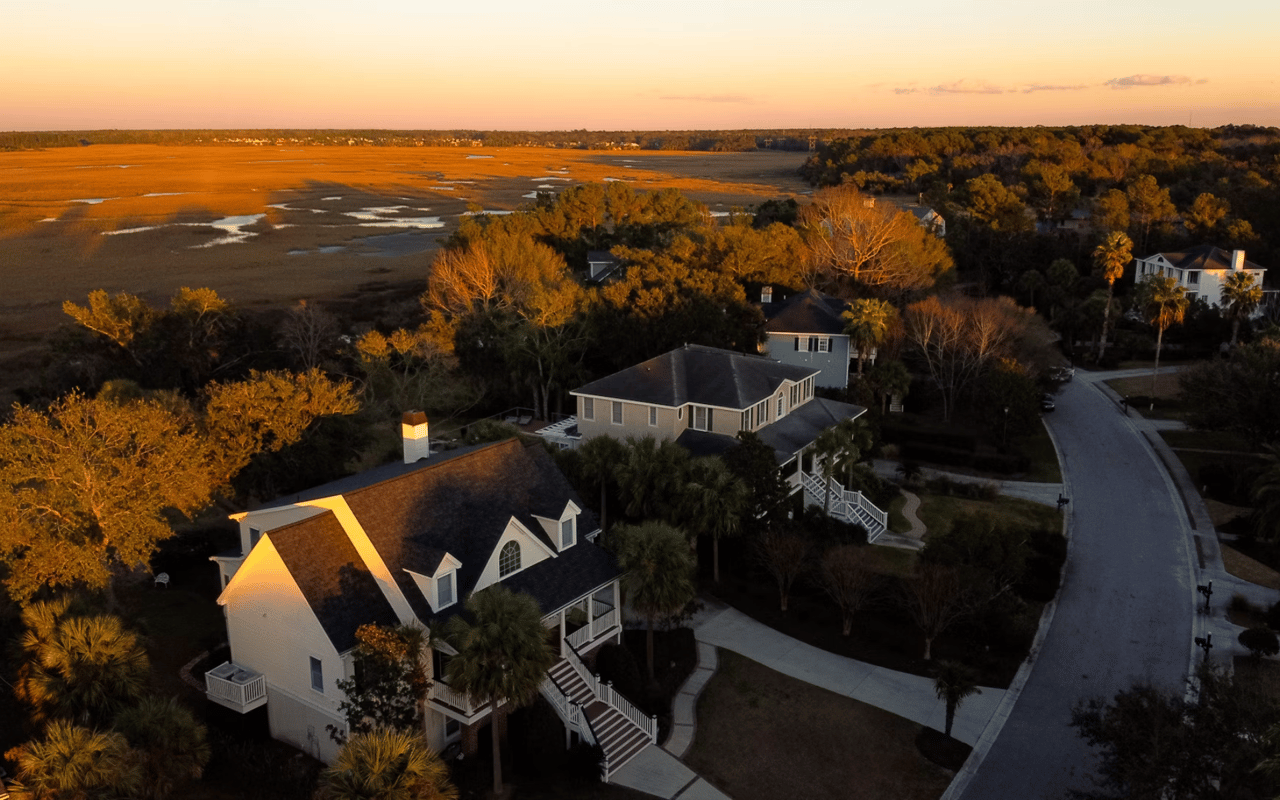
Pay attention to how the property relates to the land around it, as the relationship between the home and the lagoon, marsh, or golf course behind it is a significant part of the value. Orientation matters as well; a home that captures prevailing breezes and natural light will be far more comfortable and energy-efficient than one that doesn't.
Start with the bones of the property itself. In a coastal environment, moisture management is everything. Look carefully at the condition of the roof, the crawl space or foundation, and any exterior wood elements, including decks, pergolas, and trim. Salt air and humidity accelerate wear in ways that are less common in inland markets, so deferred maintenance on these components can signal larger expenses ahead. Ask when the HVAC system was last replaced, since units in the Lowcountry tend to work harder year-round and have shorter effective lifespans than in cooler climates.
Pay attention to how the property relates to the land around it, as the relationship between the home and the lagoon, marsh, or golf course behind it is a significant part of the value. Orientation matters as well; a home that captures prevailing breezes and natural light will be far more comfortable and energy-efficient than one that doesn't.
What To Evaluate on Every Showing
- Roof age and condition, particularly around flashing, skylights, and any areas prone to standing water.
- HVAC system age and service history, since coastal humidity puts demand on cooling equipment year-round.
- Crawl space or foundation condition, with attention to moisture barriers, ventilation, and any signs of previous water intrusion.
- Views and orientation relative to lagoons, marshes, golf courses, or the ocean, as these directly affect both enjoyment and resale value.
- The condition of shared amenities and common areas in villa or condominium regimes, which signals the financial health of the association.
- Lot position within the community, since corner lots, cul-de-sacs, and end units often offer quieter living and command stronger resale interest.
Flood Zone Designations and Insurance Deserve Close Attention
Coastal real estate anywhere in the Southeast requires buyers to pay close attention to flood zone classifications and the insurance implications that come with them. Some properties in the region fall within FEMA-designated Special Flood Hazard Areas. Flood insurance, whether through the National Flood Insurance Program or a private carrier, is an ongoing annual cost that your lender will require in certain zones and that you should factor into your total cost of ownership.
Elevation certificates, which measure a property's base flood elevation relative to FEMA's benchmarks, can meaningfully affect your insurance premiums. Properties with higher elevations relative to the base flood elevation often qualify for notably lower rates. Before closing on any property in the Lowcountry, it is worth requesting the elevation certificate and having a conversation with an insurance agent who specializes in coastal properties in South Carolina.
The good news is that many communities on both Hilton Head Island and in Bluffton have invested heavily in drainage infrastructure, and buyers who work with knowledgeable local agents get access to property-specific flood history and insurance cost estimates as part of the due diligence process.
Elevation certificates, which measure a property's base flood elevation relative to FEMA's benchmarks, can meaningfully affect your insurance premiums. Properties with higher elevations relative to the base flood elevation often qualify for notably lower rates. Before closing on any property in the Lowcountry, it is worth requesting the elevation certificate and having a conversation with an insurance agent who specializes in coastal properties in South Carolina.
The good news is that many communities on both Hilton Head Island and in Bluffton have invested heavily in drainage infrastructure, and buyers who work with knowledgeable local agents get access to property-specific flood history and insurance cost estimates as part of the due diligence process.
What to Review Before Closing
- The current FEMA flood zone designation for the specific parcel.
- The elevation certificate and how the property's elevation compares to the base flood elevation.
- Current flood insurance premium and whether it is transferable to the new owner.
- History of flood claims on the property, which can be obtained through the seller's disclosure.
- Whether the community has invested in stormwater or drainage improvements that mitigate risk.
FAQs
Is Hilton Head Island Real Estate a Good Investment?
Hilton Head Island has a long track record of holding and appreciating value, driven by limited land supply, high desirability among buyers from the Northeast and Midwest, and the island's reputation as one of the premier resort destinations on the East Coast. Whether you are purchasing a primary residence, a vacation home, or an income-producing rental property, the combination of lifestyle and long-term demand makes it a compelling market.
What Is the Difference Between a Regime Fee and an HOA Fee?
A regime fee is typically associated with attached properties, such as villas, townhomes, and condominiums, and covers shared building expenses, including exterior maintenance, common area upkeep, and often exterior insurance. An HOA or POA fee is more common in single-family home communities and covers shared amenities, roads, operations, and community programming.
What Should I Look for in a Lowcountry Investment Property?
Beyond the property itself, the most important factors include community quality, amenity access, HOA or regime fee structure, flood zone designation, and proximity to water or golf courses. Long-term appreciation in this market is closely tied to community desirability, so understanding what makes a neighborhood attractive to future buyers is just as important as evaluating the property in front of you today.
Your Investment in the Lowcountry Starts With the Right Guidance
The Lowcountry offers something rare: a place where lifestyle and investment align. Whether you are drawn to a golf cottage, a waterfront villa, a stately home, or a lakefront retreat, the right property is out there. What it takes to find it is local knowledge, an understanding of how these communities work, and an advisor who knows the nuances of each.
Reach out to me, Craig Cleveland, to begin your Lowcountry property search with the confidence of having an experienced local specialist in your corner. With in-depth knowledge of Hilton Head Island and Bluffton's most sought-after communities, I will help you find a property that fits your goals, your lifestyle, and your investment horizon.
Recommended reading: Exploring the Communities of the Lowcountry
Reach out to me, Craig Cleveland, to begin your Lowcountry property search with the confidence of having an experienced local specialist in your corner. With in-depth knowledge of Hilton Head Island and Bluffton's most sought-after communities, I will help you find a property that fits your goals, your lifestyle, and your investment horizon.
Recommended reading: Exploring the Communities of the Lowcountry